

Most B2B teams can tell you how many leads came through last month, but far fewer can tell you which marketing activity actually turned into pipeline, and even fewer can say with confidence what influenced a deal that took six months and a dozen touchpoints to close.
That’s the gap pipeline attribution is meant to close, and it’s one we see marketing teams wrestle with constantly.
Buying journeys have got longer and more fragmented, spread across paid channels, organic search, email, sales calls and word of mouth, often in no particular order.
When pipeline can’t be linked back to the activity that created it, budget decisions become difficult to defend and even harder to optimise.
This isn’t about doing marketing “wrong.” It’s about the fact that traditional tracking wasn’t built for how people actually buy today.
We cover:
- How we define pipeline attribution
- Common challenges with pipeline attribution
- Sourced vs influenced pipeline
- How we implement pipeline attribution
Pro Tip
Ruler captures every conversion, calls, forms, live chat, using first-party tracking, connects it to CRM data so you can see what turns into pipeline and revenue, and layers in statistical modelling to account for the activity that never gets a click. If you’d like to see it against your own data, book a demo.
How we define pipeline attribution
When we talk about pipeline attribution, we mean the process of connecting marketing activity, campaigns, channels, content, to the pipeline opportunities it helped create. Not just leads or form fills, but qualified pipeline that a sales team has actually picked up and is working.
It sounds straightforward until you try to do it properly. A lead might fill in a form after their fifth visit to your site, having first found you through a LinkedIn ad three months earlier. Pipeline attribution is the discipline of working out which of those touches actually mattered, and to what degree, rather than handing all the recognition to whichever source happened to be there at the end, often brand or direct search.
47% of respondents in our own research say marketing attribution improves their understanding of the customer journey and sales cycle, which tracks with what we hear from teams day to day. Once you can see the path a buyer actually took, conversations about budget and channel performance change quite a lot.
The challenges we see marketers face when setting up pipeline attribution
Very few customers make an important purchasing decision in a single session. They research across multiple channels, compare options, read reviews, engage with ads over weeks or months, and often convert in ways that are difficult to attribute . By the time a deal is won, a lot of what influenced it has already dropped out of the reporting.
A few things come up again and again when we work with teams on this.
- Long consideration windows. A prospect might first discover a company, spend weeks researching their options, return to the site several times, compare alternatives, and eventually decide to get in touch. Last-click attribution gives all the credit to the final interaction, often brand or direct search, ignoring the activity that built awareness and intent over the weeks or months beforehand. Upper-funnel activity is often doing real work long before someone converts, but without a model that accounts for that influence, those efforts can appear to contribute very little. Budgets get pulled, performance dips, and it’s not always obvious why.
- Offline and untracked conversions. A good chunk of high-value sales don’t happen through a neat online checkout. People call, reply to an email, turn up to an event, or speak to someone on the phone before buying. When those conversions never get connected back to the marketing that influenced them, some of the most valuable revenue in the business simply disappears from the attribution view. 44% of the marketers we surveyed cite cross-channel journeys, both online and offline, as one of the biggest challenges in getting attribution right, and it’s easy to see why once you look at how many of these conversions happen away from a screen.
- Platform reporting that doesn’t add up. Google, Meta, LinkedIn and TikTok each report conversions within their own attribution window, with no awareness of what the others are claiming. Add them all together and the total is usually higher than actual sales or leads. They’re each reporting from their own vantage point, but when budget decisions get made off those individual dashboards rather than a single, connected source of truth, things start to drift.
One common method we still see used a lot is hidden form fields, where a source value gets passed into a form when someone converts.
It works, up to a point, but only really captures a single source per submission, and it says nothing about anything that happened before that final form fill.
UTM tracking has a similar limitation. It’s useful while someone stays on the page it was applied to, but the moment they navigate elsewhere on the site, or come back later through a different link, that context tends to disappear.
Sourced pipeline versus influenced pipeline
This is one of the distinctions that trips people up most often, so it’s worth being clear on it early.
Sourced pipeline is the pipeline you can link directly back to a specific first-party touchpoint, the channel or campaign someone actually clicked or engaged with before converting. It’s the more concrete of the two, because there’s usually a clear, trackable interaction behind it.
Influenced pipeline is broader. It accounts for the marketing activity that shaped a decision without necessarily being the final, or only, click. A display ad someone saw three times, a OOH or radio spot, none of that shows up neatly in a “source” field, but it’s often doing real work behind the scenes.
Most teams end up needing both. Sourced pipeline gives you a clean, defensible view of what’s directly driving opportunities.
Influenced pipeline gives you a much fuller picture of everything contributing to a deal, including the upper-funnel activity that would otherwise get written off as ineffective.
56% of the marketers we surveyed say the majority of their leads come from inbound marketing, and in our experience, a fair amount of that inbound activity is itself the result of influence from other channels earlier in the journey.
How we implement sourced pipeline attribution
Sourced pipeline attribution only works if you can trust where the data came from, which is why we lean on first-party tracking rather than third-party cookies or hidden form fields.
A first-party JavaScript tag sits on your own site and follows a visitor’s journey from their first visit through to the point they convert, whether that’s a form submission, a phone call or a live chat enquiry.
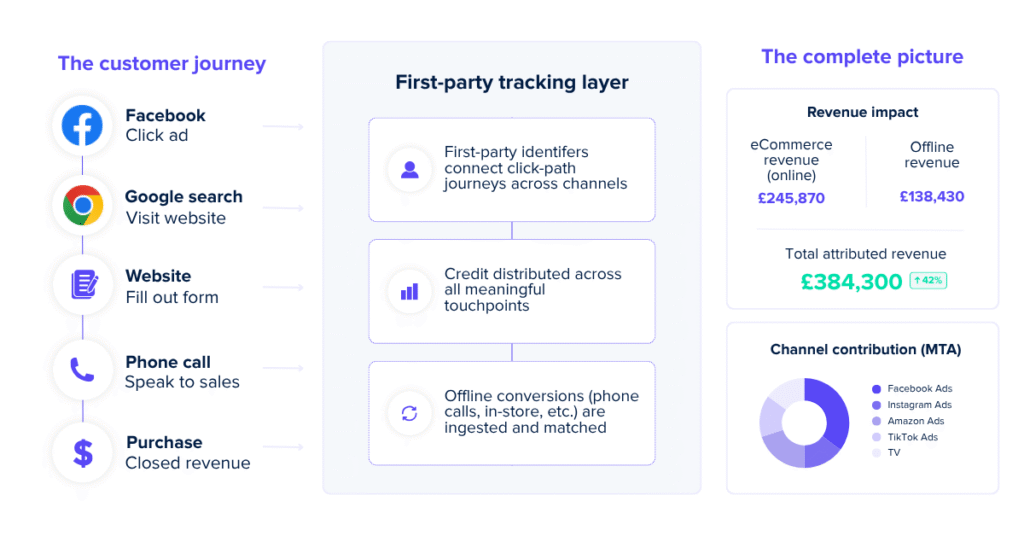
As the tag is first-party, it doesn’t rely on the same infrastructure that’s been affected by browser privacy changes over the past few years, so it holds up as more of that third-party tracking gets switched off.
Once a conversion happens, the full journey data gets tied back to the CRM record for that enquiry, so as the deal moves through pipeline stages, changes value or eventually closes won or lost, all of that gets connected back to the original source and every touchpoint along the way.
The data doesn’t just flow one way, either. Once revenue and pipeline stage are connected back to source, that same information can be pushed back out to the ad platforms it came from, so Google, Meta and the rest are optimising against actual closed revenue rather than just form fills or clicks.
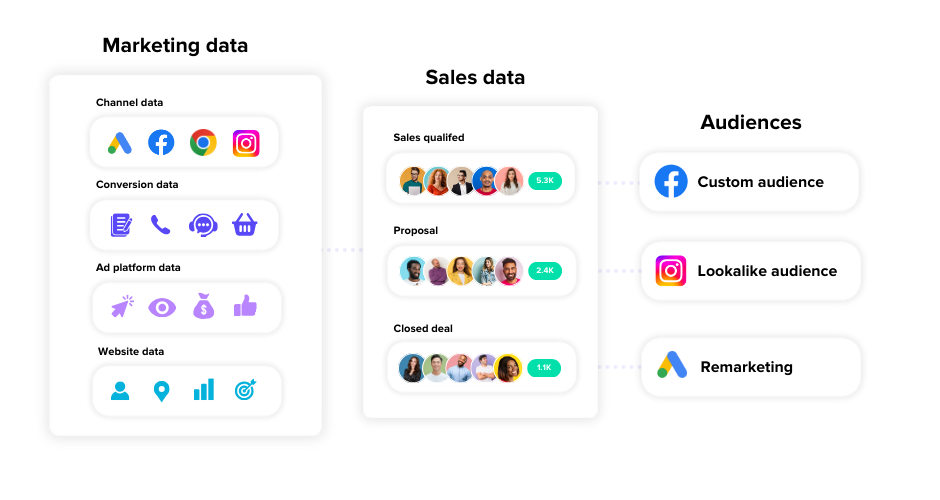
From conversations with marketers running this kind of set-up, this tends to be where the real gains turn up, because a platform bidding towards revenue behaves quite differently to one bidding towards raw lead volume, even when the volume of leads looks the same on paper.
Sending back qualified lead status as soon as it’s known, rather than holding everything until the deal closes, gives the platforms a much earlier and more useful signal to work with, so the optimisation stays relevant to the sales cycle rather than lagging behind it.
How we think about pipeline attribution when there is no click
Not every channel leaves an interaction, and this is where a lot of attribution set-ups fall down, not through any fault of the marketer, just because click-based tracking was never built to capture everything.
Across the industries we’ve analysed, direct traffic averages 24.3% of sessions, and conversions reported as direct average 24.1%.
Some of that genuinely is direct, untagged links, people typing a URL from memory, that sort of thing. But based on the leads we’ve tracked and the patterns we see repeated across accounts, a decent chunk of that “direct” activity is really upper-funnel and hard-to-track channels doing their job earlier on and just not getting the credit.
This is where statistical modelling earns its place alongside first-party tracking.
A data-driven attribution model combines click-path data with impression weightings derived from marketing mix modelling, which shifts recognition away from channels like direct and brand search that tend to get over-credited, and towards the upper-funnel activity that actually shaped the decision without ever generating a click.
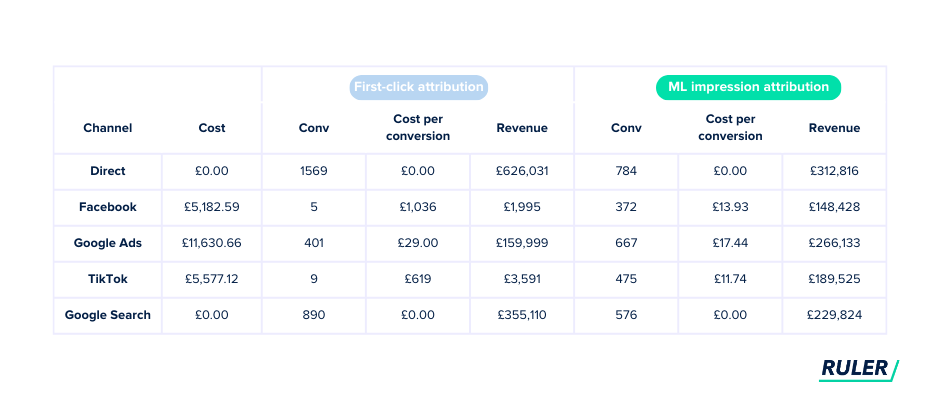
For businesses spending on channels like CTV, display, video or out-of-home, this is often the difference between a channel looking like it isn’t working and actually understanding what it’s contributing.
Marketing mix modelling goes a step further again, measuring the impact of every channel, digital and offline, TV, radio, print, using both historical performance and forward-looking forecasts.
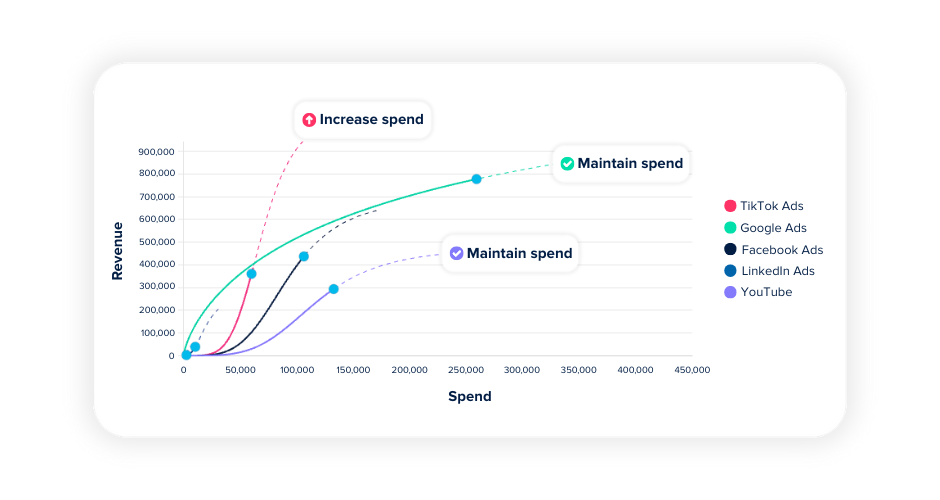
From what we’ve found working with marketing teams on this, the useful part isn’t just the headline number for each channel, it’s accounting for the context around it, seasonality, competitor activity, economic conditions, diminishing returns, all at once rather than in isolation.
That’s the kind of detail that’s genuinely hard to pull together from any single platform on its own, and it’s usually the missing piece when a channel’s performance doesn’t quite match what click data alone is suggesting.
Can Ruler help with your pipeline attribution?
Pipeline attribution isn’t something you fix with a single tracking snippet or a spreadsheet. It takes first-party tracking to establish what’s genuinely sourced, and statistical modelling to understand everything else that’s influencing decisions in the background.
If you want to see how this would work against your own pipeline data, book a demo with Ruler and we’ll walk you through it.
Pipeline attribution FAQs
What is pipeline attribution? Pipeline attribution is the process of connecting marketing activity, such as campaigns, channels or content, to the sales pipeline opportunities it helped create. It goes beyond lead or conversion tracking to show which marketing efforts are genuinely contributing to qualified pipeline that sales teams are working.
What is the difference between sourced and influenced pipeline? Sourced pipeline is pipeline you can trace directly back to a specific, trackable first-party touchpoint. Influenced pipeline is broader, covering the marketing activity that shaped a buyer’s decision without necessarily being the final or only interaction, such as upper-funnel awareness activity.
How do you attribute pipeline to marketing? Pipeline is typically attributed to marketing by tracking a lead’s full journey with first-party tracking, matching that journey to CRM records once a deal opens, and then applying an attribution model, such as first click, last click or data-driven, to see how recognition should be split across the touchpoints involved.
How do you measure marketing influence on pipeline? Marketing influence is best measured by combining first-party, click-based tracking with statistical modelling, such as marketing mix modelling, that can account for channels and touchpoints that shaped a decision without generating a trackable click, like CTV, display or PR.
Why does last-click attribution undercount pipeline contribution? Last-click attribution gives all the recognition to the final touchpoint before conversion, ignoring the upper-funnel activity, such as paid social, display or podcasts, that built awareness and intent over the weeks or months beforehand. This tends to make top-of-funnel channels look far less effective than they actually are.