

Overview
Shopify powers ecommerce for thousands of merchants worldwide, handling storefront, checkout, and post-sale activity.
Shopify’s native reporting focuses on session-level data. It doesn’t connect your marketing activity to what actually drove the sale, especially if that journey crossed multiple sessions or offline.
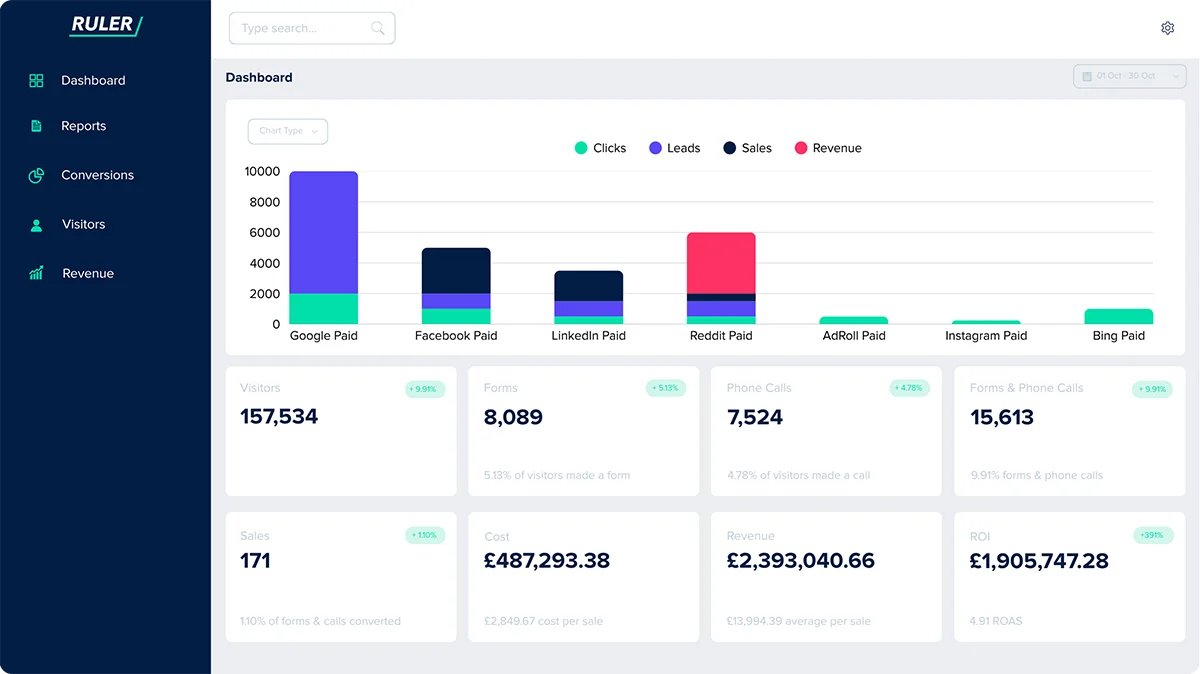
Ruler Analytics adds that missing layer. With attribution in place, you can see which channels, campaigns, and content drive real sales across the full customer journey.
Key Benefits
- Attribute Shopify orders back to the original channel and campaign
- Track the full journey, including visits before the first purchase
- Connect offline or subscription revenue back to the source
- Use multi-touch models to see which touchpoints influenced a sale
- Push conversion and order data back into ad platforms for better optimisation
Key Features
Full visibility of the user journey
Customers often discover your brand via social, return via search, and purchase later via direct. Shopify doesn’t track all that. Ruler captures every step, whether someone first visited via an Instagram ad or returned via email weeks later. Each visit is linked to build a single view of the user journey, so you can see what actually influenced the sale.
Blended DDA and impression model
Some users may engage with content or view ads without clicking. That activity still matters, especially in ecommerce, where browsing is common before purchase. Ruler uses a blended approach that combines impression data and attribution, with weighting informed by MMM. This ensures upper-funnel activity like display or influencer campaigns isn’t undervalued.
Optimise based on revenue
Sales from Shopify can be matched back to marketing efforts, even if the original visit happened offline or weeks earlier. Ruler passes that revenue data into your CRM and ad platforms. That means you can report on and optimise for revenue, not just order volume or traffic.