
Many marketing teams are short of a single, trustworthy view of what’s driving leads, opportunities and revenue, and where next month’s budget should go.
A marketing leader has Google Ads, Meta, LinkedIn, a CRM, a BI tool and a handful of spreadsheets, and every one of them tells a slightly different story about what is working.
Marketing optimisation software exists to close that gap, connecting fragmented data into something a team can actually act on rather than just report on.
In this guide we share our own definition of marketing optimisation software, what we think it needs to do well, and an honest, feature by feature look at ten of the platforms marketing and data teams shortlist most often, including our own.
We cover:
- What is marketing optimisation software
- Why marketing optimisation has gotten harder
- Marketing optimisation platform recommendations
Pro Tip
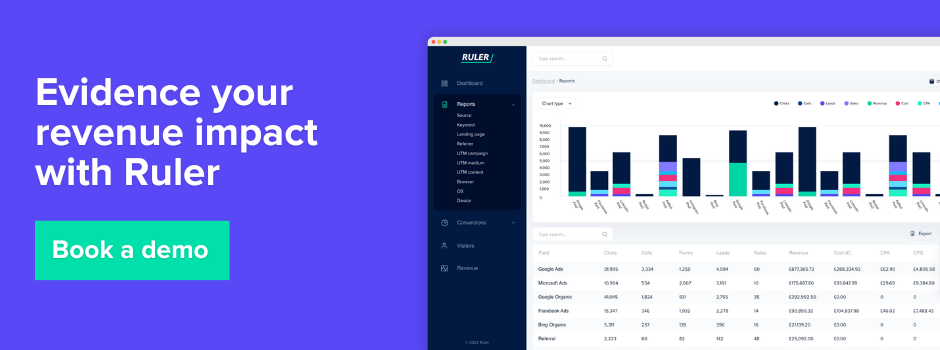
If you’re already juggling several tools and still can’t say which channels drove last quarter’s revenue, that’s usually a sign the problem is connection, not more dashboards. Book a demo with Ruler and we’ll show you what a connected view of your marketing and sales data actually looks like.
Best marketing optimisation software at a glance
| Tool | Best known for | Best suited to |
| Ruler Analytics | Multi touch attribution, offline tracking, marketing mix modelling and budget scenario planner | Teams that need to connect marketing to revenue across online and offline channels |
| Amplitude | Product analytics and behavioural cohorts | Product and growth teams optimising in-app engagement |
| Crazy Egg | Heatmaps and on-site behaviour tracking | Small to mid sized teams optimising landing pages |
| Heap | Autocapture based digital analytics | Teams that want retroactive event analysis without manual tagging |
| Hotjar | Session recordings, heatmaps and on-site surveys | UX and CRO teams gathering qualitative feedback |
| HubSpot | Marketing automation with built in reporting | Teams that want a CRM and marketing platform in one place |
| Humblytics | Cookieless analytics with built in A/B testing | Smaller teams wanting privacy first tracking and revenue attribution via Stripe |
| Marketo Measure | B2B multi touch attribution inside Adobe Marketo Engage | Enterprise B2B teams already invested in Marketo |
| Omniconvert | Ecommerce A/B testing and personalisation | Ecommerce teams optimising conversion rate and customer value |
| Optimizely | Enterprise experimentation and feature flagging | Large organisations with dedicated experimentation teams |
Our definition of marketing optimisation software
We define marketing optimisation software as any platform that helps a business collect, connect, analyse and act on marketing performance data in order to improve results and make better investment decisions.
In practice, this covers a broad set of connected jobs, from measuring and reporting on marketing performance to analysing customer journeys, understanding attribution across touchpoints, and bringing in competitive and market intelligence where relevant.
It also includes measuring revenue, forecasting future performance, and informing budget allocation across channels such as Google and Meta, LinkedIn and TikTok, display, CTV and video, organic search, email, events, and offline advertising.
Not every platform in this category does all of these things, and that’s fine. Some tools are purpose built for one job, such as heatmapping or on-site experimentation, while others try to cover the full journey from first click through to closed revenue.
Part of shortlisting the right software is being clear on which of these jobs you actually need solved, rather than buying the biggest feature list.
Why marketing optimisation is harder than it used to be
More data has not made marketing easier to optimise. If anything, it’s made the job harder, because that data now lives in more places than ever.
A marketing leader might need to pull numbers from Google, Meta, LinkedIn, TikTok, a CRM, website analytics, email platforms, a sales team and offline activity just to answer a fairly basic question about where to invest next.
Our own research found that 26% of respondents use four or more separate tools just to track performance, which gives a sense of how spread out this problem has become. When those sources stay separate, teams spend their time reconciling reports rather than deciding what to do differently.
1. Every platform tells its own version of events. Google, Meta and LinkedIn are all designed to report on the activity they can see, using their own attribution windows and their own definitions of a conversion. None of them are built to agree with each other, so optimising directly from platform reported conversions tends to create a distorted picture of what’s actually working.
2. The customer journey is long and complex. Then there’s the customer journey itself, which rarely fits into a single click path any more. Most buyers research across several channels, compare options, talk to sales, and come back more than once before converting, and a good chunk of those interactions happen offline, through a phone call, a live chat or a sales conversation that never shows up in a web analytics tool. In fact, 56% of respondents in our own data say the majority of their leads come from inbound marketing, much of which involves exactly this kind of multi touch, multi channel journey that is genuinely difficult to track end to end.
3. Upper-funnel impact is harder to measure. Channels like paid social, CTV, display, video, PR and offline advertising can influence demand weeks or months later without ever producing a trackable click, which means click based optimisation alone tends to undervalue them while overcrediting channels like branded search and direct traffic.
Marketing optimisation software reviewed for 2026
We’ve reviewed each of these platforms against publicly available product information, alongside what we’ve picked up from customer conversations and our own experience of the category. The comparison should hold up whether or not Ruler ends up on your shortlist.
Ruler Analytics
Ruler is a marketing intelligence and measurement platform built to help teams move from fragmented, channel-by-channel data towards a more complete view of marketing performance, revenue and investment decisions.
What we’ve designed it to solve
We built Ruler to close the gap between marketing activity and revenue. Ruler tracks calls, forms, live chat and other conversions using first-party tracking, then matches those enquiries to CRM records so teams can see which channels and campaigns actually produced revenue, rather than relying on lead volume alone.
The platform combines several approaches to measurement, including multi-touch attribution, conversion deduplication and marketing mix modelling (MMM). This is particularly useful when teams need to understand the contribution of channels that aren’t easily measured through clicks, such as TV, radio, out-of-home, CTV, display and other upper-funnel activity.
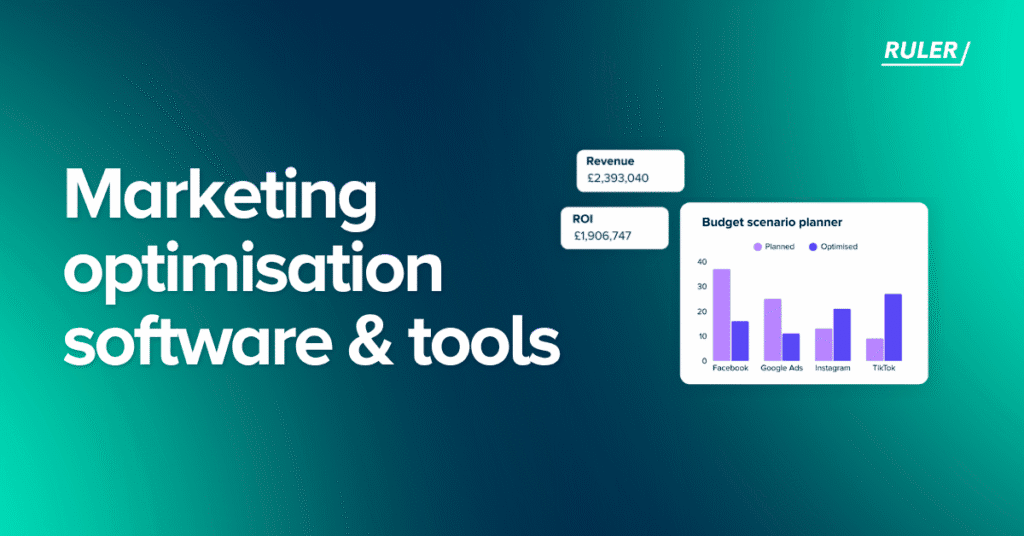
Ruler’s marketing mix modelling also goes beyond simply reporting channel performance. The modelling can identify diminishing returns as spend increases, helping teams understand where additional budget is likely to become less efficient. That feeds into Ruler’s budget scenario planner, which allows marketers to model different allocations before moving budget between channels.
Rather than looking only at what each channel delivered historically, teams can use these scenarios to explore what could happen if investment is increased, reduced or redistributed.
Where we see it work best
Ruler tends to work best for teams with a multi-channel presence and a sales process that involves more than a single online transaction, particularly where calls, forms and offline conversations all play a role in the buying journey. B2B teams, service businesses, high-value eCommerce and organisations running paid media across several channels can benefit from having attribution, revenue data and broader measurement approaches brought together in one place.
It’s also a useful fit for teams that need to make decisions about budget allocation, rather than simply report on past performance. Where diminishing returns are becoming a concern, MMM and scenario planning can provide another layer of insight into how spend might be redistributed across channels.
Consider Ruler if
You want to understand marketing performance against actual revenue rather than conversion volume. You’re running multiple channels and need a single, unified view of performance rather than several disagreeing platform reports. You want to compare attribution approaches rather than rely on one model. Or you’re trying to understand the incremental contribution of upper-funnel and offline activity and make more informed decisions about where additional budget should go.
Ruler is particularly relevant if you’re looking to move from reporting towards active budget optimisation, using marketing mix modelling to understand diminishing returns and scenario planning to test potential changes in investment before committing budget.
Pricing
Ruler’s pricing is based primarily on monthly website traffic, with four published tiers. The Small plan starts from £299 per month for up to 10,000 monthly visits, Medium from £499 per month for up to 50,000 visits, and Large from £999 per month for up to 100,000 visits. Advanced starts from £1,499 per month for sites with more than 100,000 monthly visits.
The Advanced plan is also where Ruler’s marketing mix modelling, diminishing returns and predictive headroom, Budget Scenario Planner, forecasting and scenario planning, and AI Analyst and Media Planner are included.
Annual billing saves 10%, bringing the published starting prices to £269, £449, £899 and £1,349 per month respectively. Ruler notes that pricing is indicative and can vary based on product, data and integration requirements.
See this in practice. If you’d like to see how attribution, marketing mix modelling and budget scenario planning work together on your own data, book a demo with our team. We’ll walk through your current channel mix and show you where we typically find the biggest gaps.
Amplitude
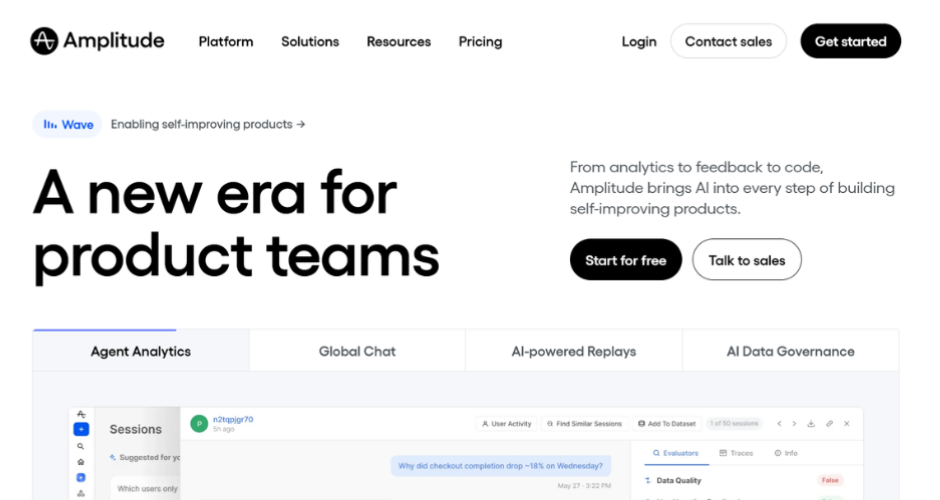
Amplitude is a product analytics platform focused on understanding user behaviour inside a product or app, using event tracking, behavioural cohorts and funnel analysis.
Where the tool shines
Amplitude’s cohort analysis, retention curves and experimentation features are genuinely strong, and it’s well suited to data teams who want to dig deep into in-product behaviour. Its free Starter plan is generous, offering a real amount of usage before any payment is required.
Where it falls short
Amplitude is built for product analytics rather than full marketing measurement, so it doesn’t natively connect offline conversions, calls or CRM revenue in the way a dedicated marketing attribution tool would. Pricing can also be difficult to predict, since it scales with event and user volume, and costs are reported to rise quickly as usage grows.
Pricing
Amplitude offers a free plan with 2 million events a month. Paid usage based pricing sits above that, with Growth and Enterprise tiers requiring a custom quote from Amplitude’s sales team.
Crazy Egg
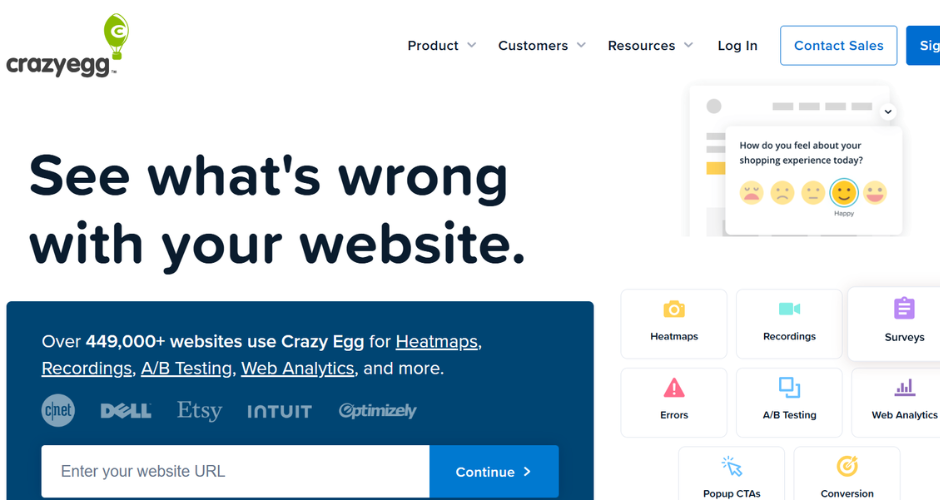
Crazy Egg is a website optimisation tool built around heatmaps, scroll maps, session recordings and simple A/B testing.
Where the tool shines
Crazy Egg is straightforward to set up and genuinely useful for spotting where visitors lose interest on a page, without requiring any coding. Its pricing is also refreshingly transparent compared with much of this category, and every plan includes unlimited website domains and seats.
Where it falls short
Crazy Egg is focused on on-page behaviour rather than full funnel or revenue attribution, so it won’t tell you which channels or campaigns are actually driving those visitors, or what happens to a lead after they convert. Reporting is also fairly limited outside of its core heatmap and recording features.
Pricing
Plans start at $29 a month for the Starter tier, rising through $99, $249 and $499 a month for Plus, Pro and Enterprise, all billed annually and scaled by monthly pageviews.
Heap
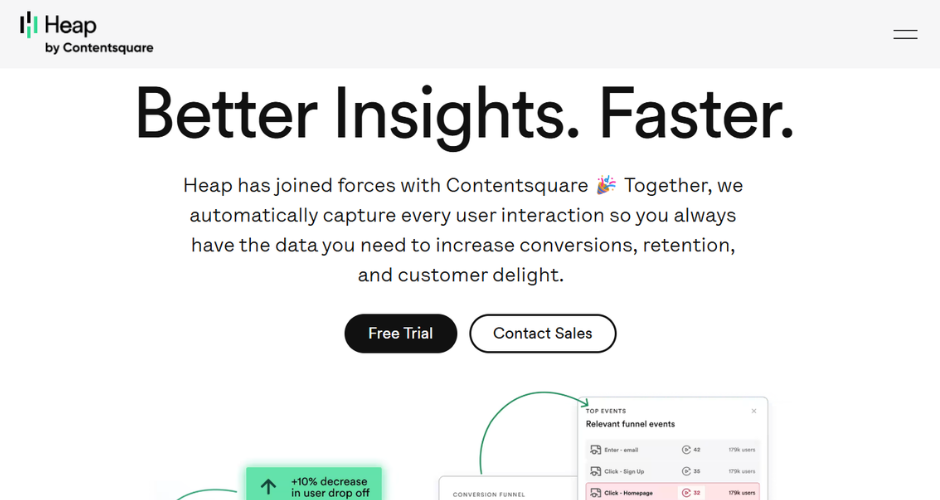
Heap is a digital analytics platform that automatically captures user interactions across web and mobile products, so teams can analyse behaviour retroactively rather than defining every event in advance.
Where the tool shines
Heap’s autocapture approach removes a lot of the manual instrumentation work that other analytics tools require, which is genuinely valuable for teams without dedicated engineering resource for tracking. It also integrates with data warehouses such as Snowflake and BigQuery for teams that want to combine product data with other business data.
Where it falls short
Because Heap captures broadly rather than selectively, teams can end up with a lot of noise to sift through before finding a useful signal, and it requires a reasonable amount of governance to keep that manageable. Like Amplitude, it’s built for product analytics rather than marketing attribution, so connecting web behaviour to offline revenue isn’t its core job.
Pricing
Heap offers a free plan covering up to 10,000 monthly sessions. Paid Growth, Pro and Premier tiers are quote based, with reported annual contract values ranging from the low thousands for smaller Growth deployments up to six figures for larger Premier implementations.
Hotjar
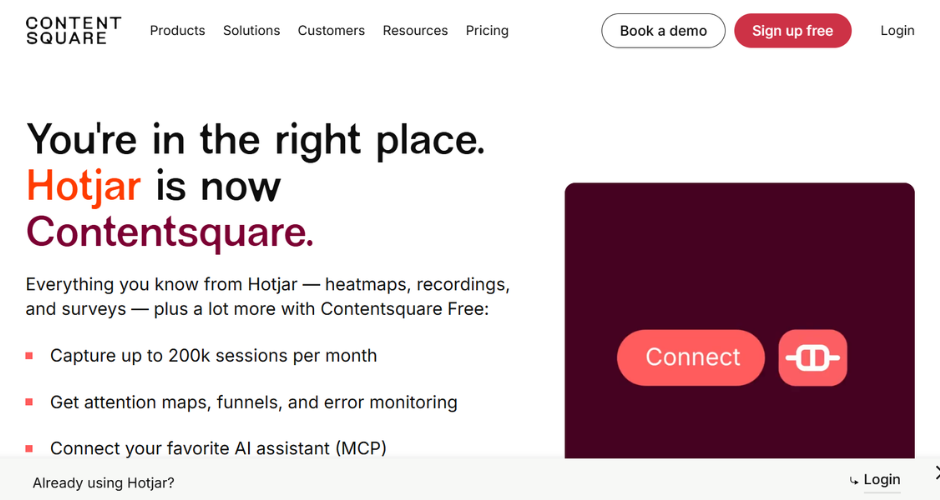
Hotjar provides heatmaps, session recordings and on-site surveys to help teams understand how visitors experience a website. Hotjar is now part of Contentsquare, and its products have been reorganised under the Contentsquare pricing structure.
Where the tool shines
Hotjar remains one of the more approachable tools for combining qualitative feedback, through surveys and recordings, with quantitative heatmap data, which is a useful pairing for UX and CRO teams trying to understand not just what visitors do but why.
Where it falls short
Following the move to Contentsquare, Hotjar’s heatmaps and recordings, its survey tools, and its product analytics are now sold as three separate products with their own pricing, which can make budgeting less straightforward than it used to be. As with the other behavioural tools on this list, it’s focused on on-site experience rather than cross channel attribution or revenue measurement.
Pricing
A free plan is available. Paid Experience Analytics plans start from around $49 a month when billed annually, with pricing scaling by session volume, and Pro and Enterprise tiers requiring a custom quote.
HubSpot
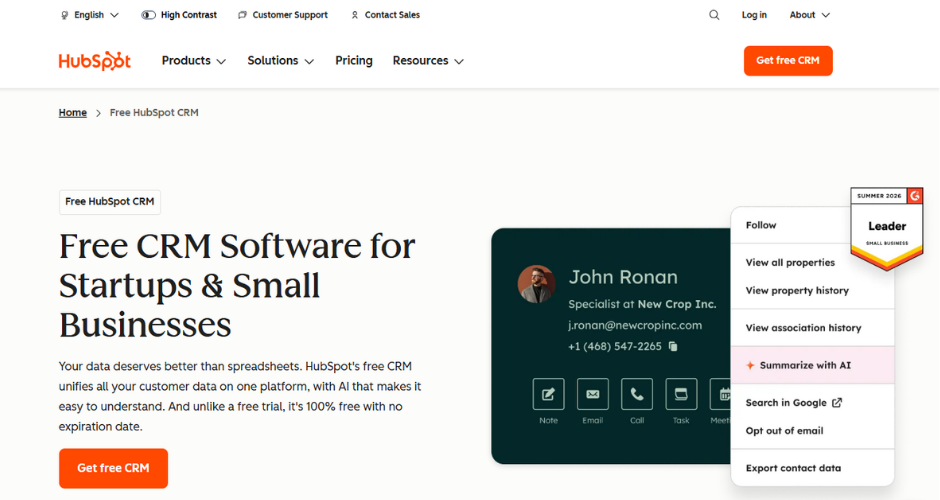
HubSpot is a combined CRM and marketing automation platform covering email marketing, landing pages, forms, ads management and reporting across its Marketing Hub.
Where the tool shines
HubSpot’s strength is having marketing, sales and service data live inside the same CRM, which means basic attribution and pipeline reporting come reasonably built in without needing to stitch together separate tools. It’s a genuinely capable platform for teams that want one system to run most of their day to day marketing and sales activity.
Where it falls short
HubSpot’s native attribution reporting is fairly standard rather than sophisticated, and teams with complex, multi touch B2B journeys or a need to model upper funnel and offline activity in depth often find themselves reaching for a dedicated attribution or measurement tool alongside it. Costs can also increase quickly once you move into Professional and Enterprise tiers, and a mandatory onboarding fee applies to some plans.
Pricing
A free CRM tier is available. Marketing Hub Starter begins from around $20 a seat a month on annual billing, Professional starts at roughly $890 a month including a limited number of contacts and seats, and Enterprise pricing starts from around $3,600 a month, with additional charges for extra marketing contacts.
Humblytics
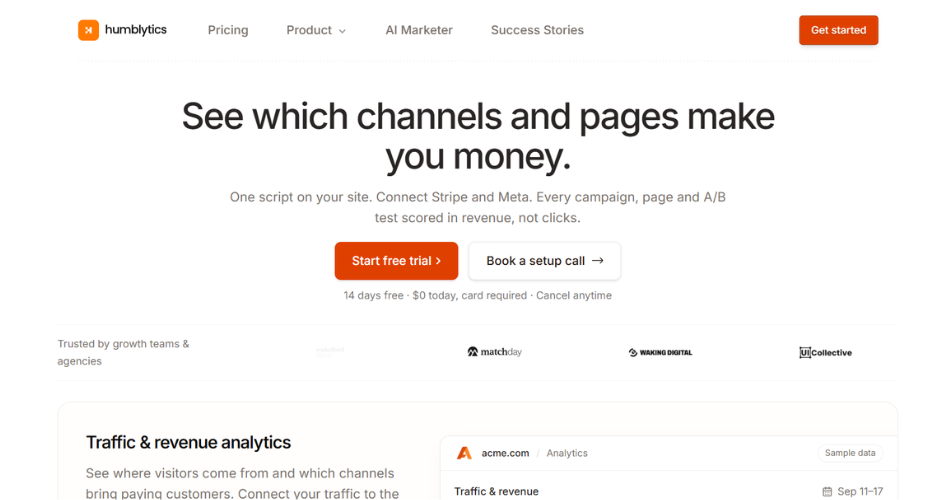
Humblytics is a privacy first, cookieless analytics platform built for smaller teams, combining web analytics, heatmaps, funnels and visual A/B testing without a developer needed to run it.
Where the tool shines
Because it doesn’t rely on cookies, Humblytics avoids consent banner requirements while still tracking full traffic volume, which is a genuinely useful trade-off for smaller sites concerned about data loss from ad blockers and consent drop-off. Its Stripe integration also lets teams see which traffic sources and page variants are driving actual purchases rather than just clicks.
Where it falls short
Humblytics is aimed squarely at smaller teams and simpler sites rather than complex, multi channel B2B journeys, and it doesn’t offer the depth of multi touch attribution or CRM matching that larger organisations with offline sales processes are likely to need.
Pricing
Plans start with a free Lite tier for very low traffic, with paid plans reported from around $9 a month up to $49 a month or higher depending on monthly views and events, and higher tier plans built around A/B testing and revenue attribution priced upwards from there.
Marketo Measure
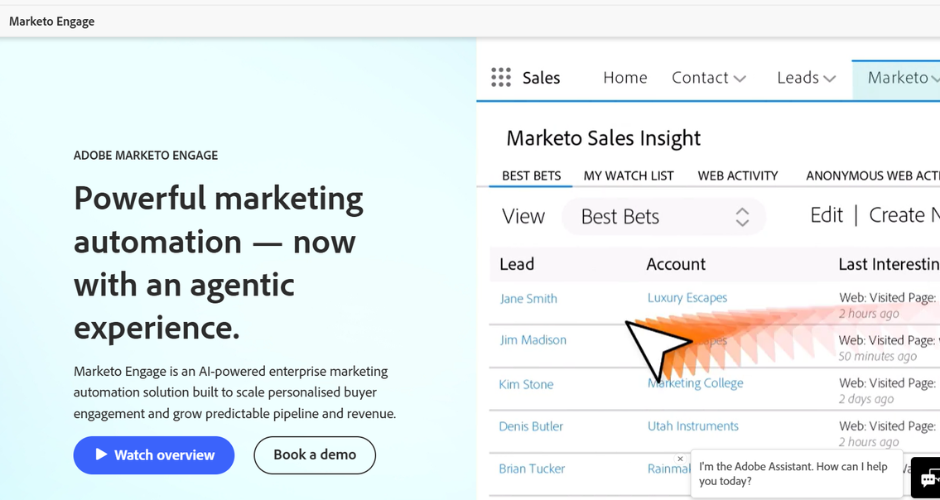
Marketo Measure, formerly known as Bizible, is Adobe’s multi touch attribution product, included within the Ultimate tier of Adobe Marketo Engage.
Where the tool shines
Marketo Measure supports six attribution models running side by side, including first touch, lead creation, U-shaped, W-shaped, full path and a custom model builder, which gives B2B teams a fair amount of flexibility in how they weight touchpoints across a long sales cycle. Its AI powered Attribution AI option is a useful step up for teams that want pattern based modelling rather than fixed rules.
Where it falls short
Marketo Measure is only available on Marketo Engage’s Ultimate tier, which is the most expensive package in an already premium platform, so it’s rarely a standalone or low cost option. Adobe also doesn’t publish list prices, which makes it harder to budget for compared with more transparent tools on this list.
Pricing
Adobe doesn’t publish public pricing for Marketo Engage. Third party estimates put entry level Growth plans at roughly $895 a month for smaller databases, rising to several thousand pounds a month for the Ultimate tier that includes Marketo Measure, scaled by the size of your marketing database.
Omniconvert
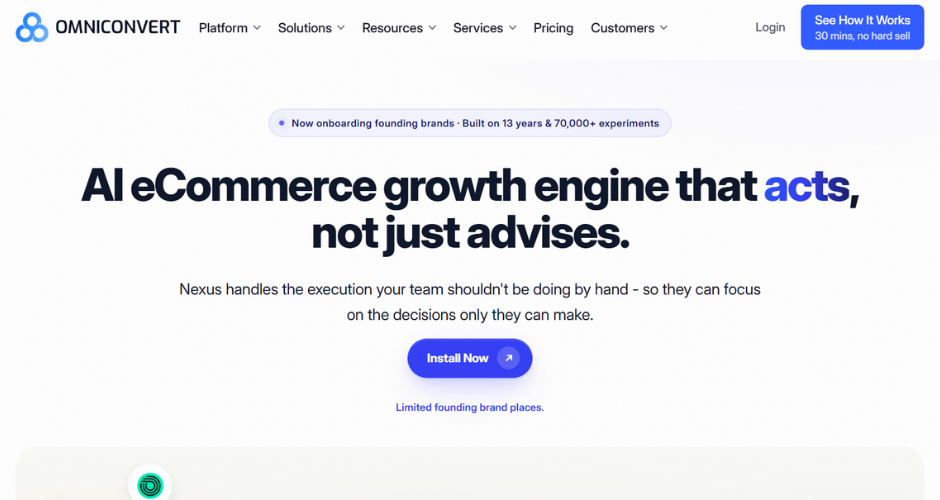
Omniconvert is an ecommerce focused conversion rate optimisation platform combining A/B testing, personalisation and on-site surveys.
Where the tool shines
Omniconvert’s segmentation and customer value metrics, including CLV and RFM based segmentation, make it a solid choice for ecommerce teams who want to optimise beyond raw conversion rate, towards genuine customer value. Its free tier, covering up to 50,000 tested visitors with no credit card required, is also a fair way to trial the platform on real traffic.
Where it falls short
Omniconvert is built specifically for ecommerce experimentation rather than broader marketing attribution or cross channel budget allocation, so teams needing to understand offline conversions or B2B sales cycles will need a different tool alongside it.
Pricing
A free plan covers up to 50,000 tested visitors a month. Paid plans are usage based, with reported starting prices from around $167 a month at lower traffic volumes, scaling into the low thousands per month for larger sites, and custom enterprise pricing for full managed services.
Optimizely
Optimizely is an enterprise experimentation and digital experience platform covering web and feature experimentation, personalisation, content management and commerce.

Where the tool shines
Optimizely’s statistical engine and feature experimentation tools are built for engineering led testing programmes running server side and mobile experiments, not just browser based A/B tests, which puts it a level above most CRO tools in technical depth. It also supports enterprise requirements such as SOC 2 and HIPAA compliance and dedicated support.
Where it falls short
Optimizely doesn’t publish list pricing, and third party estimates suggest standalone Web Experimentation contracts typically start from the tens of thousands of pounds a year, which puts it well beyond the reach of most small and mid sized marketing teams. It’s also built around experimentation and personalisation rather than cross channel attribution or budget allocation.
Pricing
Optimizely doesn’t publish public pricing. Buyer reports suggest annual contracts typically start from around $36,000 to $40,000 a year for standalone Web Experimentation, scaling well beyond that for enterprise, multi product deployments.
Choosing the right marketing optimisation software for your team
If you’ve read this far, you’ve probably recognised at least one of the problems we described earlier, whether that’s fragmented data across too many platforms, a customer journey that’s harder to follow than it used to be, or upper funnel activity that never gets the credit it deserves.
t’s simply a reflection of how spread out marketing has become, and it’s exactly the gap that marketing optimisation software is meant to close.
If what you’re really after is a clearer line between your marketing spend and the revenue it produces, particularly across calls, forms and offline conversions that most tools miss entirely, that’s the problem we built Ruler to solve.
Book a demo with Ruler and we’ll show you what your own marketing data looks like once it’s connected to revenue, attribution and a proper view of where your spend should go next.