
Your ad platforms all say something different. Then Google Analytics tells you something else. Somewhere in between is what actually happened, and working out which number to trust before your next budget meeting is a genuinely hard problem.
It’s not that either platform is lying to you, it’s that they’re each measuring performance from their own perspective, using their own attribution windows, and neither one, by default, sees the phone call, the CRM deal, or the purchase that happened three weeks after someone first saw your ad.
If you’re managing Facebook and Instagram spend alongside Google, LinkedIn, TikTok or offline channels, this gap gets wider the more channels you add. Facebook tracking software exists to close that gap, connecting what happens on and off Facebook to real leads, sales and revenue.
In this guide, we discuss:
- What is Facebook tracking software
- Where native Facebook tracking tools fall short
- What to look for in Facebook tracking software
- Our picks for Facebook tracking solutions
Pro Tip
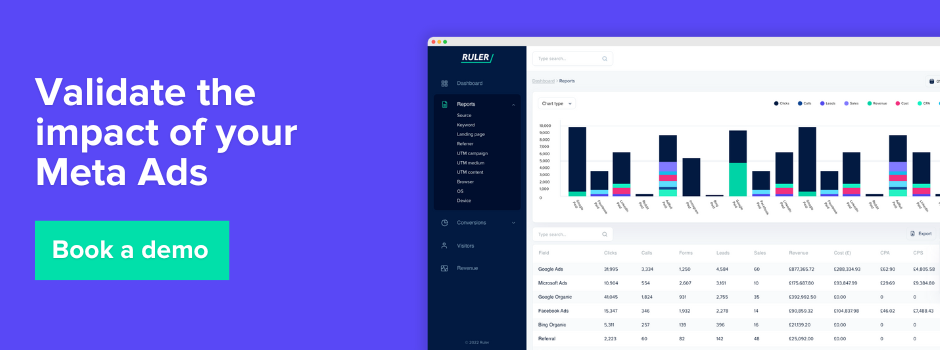
If you’re tired of Facebook Ads Manager, Google Analytics and your CRM all telling a different story, book a demo with Ruler and we’ll show you how to get one single source of truth the whole business can work from.
Our definition of Facebook tracking software
We use this term a lot, so it’s worth being precise about what we mean by it.
For us, Facebook tracking software is any tool built to capture, deduplicate and report on the interactions that happen between a person and your Facebook or Instagram advertising, from the initial ad view or click through to whatever happens next, whether that’s a website visit, a form fill, a phone call or a purchase.
Some tools do this natively inside Meta’s own ecosystem, using the Pixel or Conversions API. Others sit outside Meta entirely and pull Facebook data into a wider, cross-channel view alongside Google, LinkedIn and other paid channels.
In our own conversations with marketing and data leaders, the tools that do this well share one thing in common, they treat Facebook as one channel among several rather than in isolation.
That matters because, in our data, 27% of respondents say they use Facebook for advertising, and almost none of them are only using Facebook. If your tracking software can’t connect that Facebook click to what happened on Google, LinkedIn or offline afterwards, you’re only ever seeing part of the picture.
Where we think native Facebook tracking falls short
Meta’s own tools, the Pixel and Conversions API, do a reasonable job of measuring what happens within Facebook’s own ecosystem, but they have some well known limits worth being upfront about. Native Facebook tracking generally struggles with the following.
- It can’t see cross-channel journeys reliably. Someone discovers you through Facebook, researches through Google, comes back through email, and finally converts through a branded search three days later. Facebook’s own attribution often misses that entirely, because the tracking chain breaks as soon as someone moves between channels.
- It’s biased towards its own attribution window. Facebook reports conversions within its own click and view-through windows, without accounting for what other platforms are simultaneously claiming credit for. Add up what every platform reports and the total will usually exceed your actual sales.
- It doesn’t connect to offline revenue. If a lead converts by phone, in a showroom, or through a sales conversation that started days after the ad click, native Facebook reporting has no way of tying that back to the campaign that started it.
- It undervalues upper-funnel influence. A lot of Facebook and Instagram activity works as an awareness or consideration driver rather than a last-click conversion. Without a measurement approach that credits impressions and assists, that influence tends to get quietly absorbed by direct or brand search instead.
We know this is a widespread issue rather than an edge case. In our data, 28% of marketers mention siloed data as an obstacle to effective marketing attribution, and native, platform-locked tracking is one of the more common causes.
What we recommend looking for in Facebook tracking software
Based on what we hear from customers evaluating this space, here’s what we’d suggest prioritising when comparing tools.
- First-party tracking that holds up under privacy changes. Tools reliant on third-party cookies or client-side pixels alone are increasingly unreliable, particularly on iOS. Look for first-party tracking and a Conversions API integration as standard.
- Deduplication across channels, not just within Facebook. If a customer engages with Facebook and Google before converting, you want one clean conversion record, not two platforms independently claiming the same sale.
- Attribution that goes beyond last click. Multi-touch or data-driven attribution gives Facebook (and every other channel) credit proportionate to its actual role in the journey, rather than none at all if it wasn’t the final touchpoint.
- The ability to connect offline and CRM conversions back to Facebook campaigns. This is where a lot of native and even some dedicated tracking tools fall down, and it’s often where the highest-value conversions are hiding.
- A route to feed data back into Meta. The best tools don’t just report on performance, they send revenue and offline conversion signals back to Facebook’s ad platform, which in turn improves bidding and audience targeting.
We’d add one more note here specifically. We know 25% of marketers who use paid social struggle to track it effectively, and in our experience that’s rarely a Facebook-specific problem.
It’s usually a symptom of a wider measurement setup that hasn’t been built to handle cross-channel, part-online, part-offline customer journeys.
Facebook tracking software reviewed for 2026
We’ve reviewed ten platforms below, from dedicated attribution tools through to mobile measurement partners, product analytics platforms and tag management systems that marketing teams often adapt for Facebook tracking.
Ruler Analytics
Ruler is a marketing measurement platform built to solve the exact problem most tools on this list only partially address, connecting Facebook activity to every other channel and to real, CRM-verified revenue, without duplicating credit across platforms.
What we’ve designed it to solve
We built Ruler because relying on Facebook Ads Manager or GA4 in isolation meant our own customers were making budget decisions on incomplete and often duplicated data.
Ruler uses first-party data tracking, following visitors from their first interaction with a Facebook ad through to a call, form, live chat or sale, and matches that journey back to CRM records so you’re reporting on revenue rather than platform-reported conversions.
Because attribution runs across every channel in one place, Ruler deduplicates conversions rather than letting Facebook and Google each independently claim the same sale, giving you one unified report instead of several conflicting ones.
In addition to our click-path attribution, our marketing mix modelling layers in statistical modelling to measure Facebook’s impact alongside every other channel, including offline activity, accounting for seasonality and diminishing returns.
Where we see it work best
Ruler tends to work best for marketing teams running Facebook and Instagram alongside other paid channels, particularly where some of the best leads or sales happen offline, over the phone, or through a longer consideration window than a single Facebook click can capture.
As Ruler combines multi-touch attribution with impression-based modelling, credit shifts away from over-attributed channels like direct and brand search and towards the Facebook activity that actually built the awareness and intent behind the sale.
Ruler also sends revenue and offline conversion signals back to Meta’s ad platform, so Facebook’s own bidding and audience optimisation improves as a result, rather than working from incomplete pixel data alone.
For teams planning next quarter’s spend, our budget scenario planner lets you model different Facebook and cross-channel budget scenarios before committing spend, and we’ve written more on how that connects to budget allocation using marketing mix modelling on our blog.
Consider Ruler if
Consider Ruler if you’re running Facebook alongside two or more other channels and want one deduplicated view of what’s actually driving revenue, if a meaningful share of your conversions happen offline or over the phone, or if you want Facebook attribution and marketing mix modelling working together rather than as two separate tools you have to reconcile manually.
Pricing
Ruler’s published plans start with a Small Business tier from £199 per month for up to 5,000 visits, rising through Medium Business at £649 per month and Large Business at £1,149 per month, with custom Advanced pricing above 200,000 visits. Exact pricing depends on your traffic volume and requirements, so it’s worth booking a demo for a tailored quote.
AppsFlyer
AppsFlyer is a mobile measurement partner used widely by app-based businesses to attribute installs, in-app events and revenue back to the marketing channel, including Facebook, that drove them.
Where the tool shines
AppsFlyer’s deep integration with Meta for Business is one of its most frequently cited strengths, letting app marketers attribute installs and in-app events down to ad network, campaign, ad group and creative level. Its cohort and retention reporting, combined with fraud detection, makes it a solid choice for teams spending heavily on app install campaigns across Facebook and other networks simultaneously.
Where it falls short
AppsFlyer is built specifically for mobile app attribution, so it’s not the right fit if your Facebook conversions mostly happen on a website rather than inside an app. Pricing is also based on non-organic installs and monthly active users rather than a flat fee, which some buyers find hard to forecast, and the platform has a steeper learning curve than simpler, web-focused tracking tools.
Pricing
AppsFlyer offers a free Zero plan for apps with under 12,000 lifetime non-organic installs, a usage-based Growth plan, and custom Enterprise pricing. Published estimates put Growth plans from roughly $500 to $1,000 a month for smaller volumes, scaling from there.
Adjust
Adjust is a mobile measurement partner similar in scope to AppsFlyer, offering attribution, fraud prevention and analytics for app marketers running campaigns across Facebook and other networks.
Where the tool shines
Adjust integrates directly with Meta for Business alongside Instagram, Snapchat and TikTok, and its Fraud Prevention Suite is well regarded for catching install fraud in real time, which matters if a meaningful share of your Facebook app install budget is at risk of fraudulent clicks. Its cross-platform journey support, spanning mobile web, app, CTV and offline, gives a broader view than some competitors offer natively.
Where it falls short
Like AppsFlyer, Adjust is primarily built for app measurement rather than web-based Facebook conversion tracking, so businesses generating leads or sales through a website will find it’s not really designed for that use case. Some users have also noted that setup and documentation can be inconsistent, which adds implementation time.
Pricing
Adjust offers a free Base tier with custom pricing for its Core and Enterprise plans, based on monthly tracked users and the specific modules required, such as fraud prevention or incrementality testing.
Google Analytics
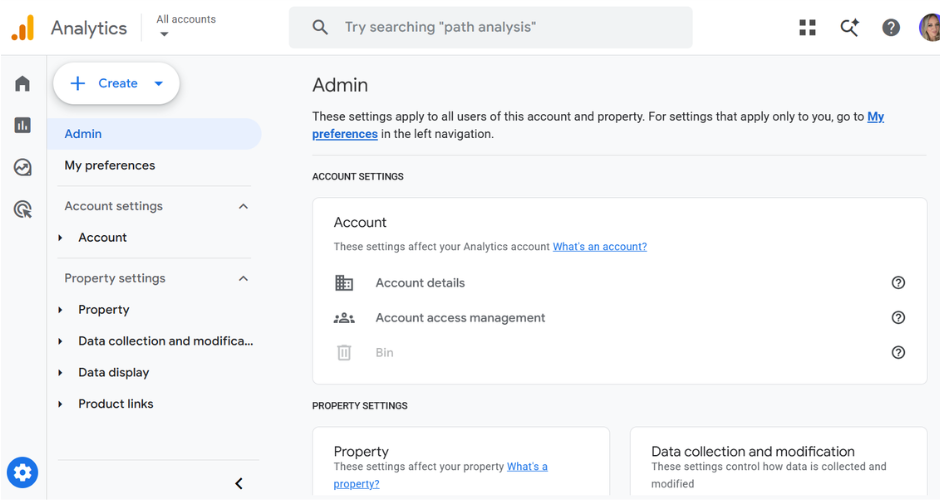
Google Analytics 4 is Google’s free analytics platform, and it’s the tool most businesses use as a baseline for measuring Facebook traffic and conversions on their website.
Where the tool shines
GA4 is free, widely adopted, and gives a reasonable view of on-site behaviour from Facebook traffic, including sessions, engagement and conversion paths. Its data-driven attribution model uses machine learning to distribute credit across touchpoints rather than relying purely on last click, and it’s a sensible starting point for smaller businesses without budget for a dedicated attribution tool.
Where it falls short
GA4 doesn’t account for impression-based modelling, so it tends to undervalue the upper-funnel impact of Facebook and Instagram campaigns that build awareness and influence a later click or conversion, often crediting that later action to direct or brand search instead. It also has no way of connecting ad spend to CRM revenue, so you can see that a campaign drove conversions without knowing whether those were high-value customers or low-value ones, and it can’t attribute offline conversions like phone calls or in-person sales back to the Facebook campaign that started the journey.
Pricing
Google Analytics 4 is free to use, with Google Analytics 360 available as a paid enterprise tier for higher data volumes and additional features, priced on request.
Still reconciling three different Facebook conversion numbers every month? That’s usually a sign your attribution setup is siloed rather than unified. Ruler pulls Facebook, Google and every other channel into one deduplicated report tied to actual CRM revenue. Book a demo to see it working on your own data.
Heap
Heap is a digital insights and product analytics platform, now part of Contentsquare, that automatically captures user behaviour on web and mobile without manual event tagging.
Where the tool shines
Heap’s autocapture approach means every click, page view and interaction is recorded automatically, so marketing teams can retroactively define Facebook-driven conversion events without having to instrument tracking code in advance. This is useful if you want to analyse how Facebook traffic behaves on-site after the fact, rather than deciding in advance exactly what to measure.
Where it falls short
Heap is a product analytics tool first and a marketing attribution tool a distant second, so it has no native Facebook ad spend integration, no Conversions API, and no built-in multi-touch attribution model. Marketing teams typically need to pair it with a dedicated attribution or ad platform integration to get a genuine Facebook tracking view, and its paid pricing is not publicly listed, which makes budgeting harder up front.
Pricing
Heap offers a free plan for up to 10,000 sessions a month, with Growth, Pro and Premier tiers priced on request, typically starting in the low thousands of dollars annually and scaling with usage.
LittleData
LittleData is a server-side tracking platform built primarily for Shopify and other ecommerce stores, designed to fix inaccurate data flowing into Google Analytics, Google Ads and Meta Ads.
Where the tool shines
LittleData was one of the earlier platforms to bring server-side tracking to Shopify stores specifically, connecting first-party customer and revenue data into Meta Ads alongside Google and Klaviyo. It’s particularly strong on subscription and Recharge tracking, and its Meta integration improves Event Match Quality Scores through the Conversions API, which helps Facebook’s algorithm target more accurately.
Where it falls short
LittleData is built around fixing GA4 and Google Ads data accuracy first, with Meta support as one part of a wider integration set rather than the main focus, so if unified, cross-channel Facebook attribution alongside offline conversions is your priority, you’ll likely need a complementary tool. It’s also Shopify-centric, so businesses outside ecommerce, or on a different platform, aren’t the intended audience.
Pricing
LittleData pricing starts from around $99 a month and scales with order volume, with enterprise pricing available on request for higher-volume stores.
Matomo
Matomo is a privacy-focused web analytics platform, available as a hosted cloud product or self-hosted on your own infrastructure, positioned as an ethical, GDPR-friendly alternative to GA4.
Where the tool shines
Matomo’s Multi-Channel Conversion Attribution feature lets marketers compare standard attribution models, including first interaction, linear and time decay, to see how Facebook contributes to conversions alongside other channels, rather than defaulting to last click. Its self-hosted option also gives businesses full data ownership, which some organisations in regulated sectors specifically require.
Where it falls short
Matomo’s attribution models are rule-based rather than algorithmic or data-driven, so unlike some enterprise tools it doesn’t automatically weight channels based on historical conversion patterns. Self-hosting also requires ongoing server management and technical resource, which is a meaningful trade-off for teams without in-house infrastructure support.
Pricing
Matomo Cloud starts with a public Business plan priced per month based on traffic volume, with a free 21-day trial available, while self-hosted On-Premise pricing and Enterprise plans are quoted individually.
Mixpanel
Mixpanel is a product analytics platform built around event tracking, commonly used by product and growth teams to understand user behaviour and, in some cases, tie that back to Facebook ad performance.
Where the tool shines
Mixpanel’s event-based model gives detailed funnel and retention analysis, and its multi-touch attribution features, available from the Growth tier upwards, let teams see how Facebook campaigns contribute to product engagement and conversion. For businesses already using Mixpanel for product analytics, this attribution view comes at relatively little extra cost.
Where it falls short
Mixpanel has no native Facebook Conversions API integration and no offline or CRM revenue matching, so most teams pair it with a data integration tool such as Improvado to bring Facebook Ads data in. Its event-based pricing model can also become expensive quickly for high-volume tracking implementations, since cost is driven by event count rather than a flat fee.
Pricing
Mixpanel offers a free plan for up to 1 million monthly events, a Growth plan priced at roughly $0.28 per 1,000 events above that (up to a 20 million event cap), and custom Enterprise pricing typically starting around $25,000 a year.
Stape
Stape is a server-side tracking infrastructure provider, best known for hosting server-side Google Tag Manager containers and offering a dedicated Facebook Conversions API Gateway.
Where the tool shines
Stape’s Facebook CAPI Gateway handles event forwarding, deduplication between the browser pixel and server-side events, and enrichment with advanced matching parameters, all of which improves the accuracy of Facebook conversion data, particularly for users on iOS or with ad blockers enabled. It’s a genuinely strong, low-cost option for businesses that specifically want to strengthen their Meta Conversions API setup.
Where it falls short
Stape is infrastructure rather than a reporting or attribution platform, so it doesn’t give you dashboards, cross-channel deduplication or CRM matching on its own. It’s designed to be layered into a server-side Google Tag Manager setup, which means it suits teams with existing technical resource more than marketers looking for an out-of-the-box attribution view.
Pricing
Stape offers a free tier and paid hosting plans starting from around $20 a month billed monthly, or roughly $17 a month billed annually, with additional power-ups and gateways priced separately.
Tealium
Tealium is an enterprise customer data platform combining tag management, real-time data orchestration and audience segmentation, used by large organisations to unify data across many tools, including Facebook Ads.
Where the tool shines
Tealium’s iQ Tag Management and EventStream products give enterprises granular control over how data, including Facebook pixel and conversion events, is collected and routed, with server-side processing that’s more resilient to browser privacy restrictions than client-side tags alone. Its Predict ML module also adds propensity scoring, which some teams use to inform which audiences to prioritise on Facebook and other paid channels.
Where it falls short
Tealium is priced and built for large enterprises, with a steep cost and a fairly involved implementation, so it’s simply not accessible for smaller marketing teams. It’s also a data orchestration and CDP platform first, not a dedicated attribution tool, so getting a genuine cross-channel, revenue-based view of Facebook performance still typically requires pairing it with reporting or attribution software downstream.
Pricing
Tealium doesn’t publish pricing publicly. Third-party estimates put iQ Tag Management alone at roughly $30,000 to $60,000 annually, with the full Customer Data Hub, including AudienceStream CDP, typically running from around $150,000 up to $400,000 or more a year depending on data volume.
Booking a demo with Ruler
The numbers only tell you so much. The real challenge is understanding which Facebook conversions are genuinely driving revenue, where they fit into the wider customer journey, and whether you’re giving Facebook too much or too little credit.
That’s precisely the problem we built Ruler to solve, using first-party tracking and multi-touch attribution to deduplicate conversions across every channel, connect Facebook activity to real CRM revenue, and feed that data back to Meta to improve bidding.
Book a demo with our team and we’ll walk through your current Facebook measurement setup, show you what’s likely being missed, and demonstrate how Ruler would close the gap.