
We work with marketing teams every day who are running Google, Meta, LinkedIn, TikTok, display, CTV, email and offline campaigns at the same time, and almost none of them can say with confidence which channel is actually driving revenue.
Good marketing intelligence software brings fragmented data together, connects it to pipeline and revenue, and helps you decide where the next pound of budget should go. In this guide we compare the marketing intelligence tools and platforms we see marketers shortlisting most often, what each one does well, and where it tends to fall short.
We discuss:
- What is marketing intelligence software
- Where traditional reporting falls short
- Where marketing intelligence tools should help
- Marketing intelligence tools reviewed
Pro Tip
Before you build a shortlist, it is worth mapping out which parts of your funnel you actually struggle to measure, whether that is call conversions, offline revenue, or upper funnel channels like CTV and display. Book a demo with Ruler and we will talk you through how a proper marketing intelligence setup could close those gaps.
Best marketing intelligence software at a glance
| Software | Best known for | Where it fits | Pricing model |
| Ruler Analytics | Connecting marketing touchpoints to revenue | Teams that need attribution, call tracking and marketing mix modelling in one place | From around £199 to £1,149 per month based on traffic, custom pricing above that |
| 6sense | Account based intent data and predictive scoring | B2B teams running ABM programmes | Custom quoted, typically £45,000 to £80,000+ per year |
| Adobe Analytics | Enterprise digital analytics and journey analysis | Large organisations with complex digital estates | Custom quoted, usually tens of thousands per year upwards |
| Brandwatch | Social listening and consumer intelligence | Brand, PR and research teams tracking sentiment at scale | Custom quoted, roughly £15,000 to £120,000+ per year depending on modules |
| HubSpot Marketing Hub | All in one marketing automation with built in reporting | SMBs and mid-market teams who want CRM and marketing in one platform | Free tier available, paid plans from around £15 per seat, Professional from around £700 per month |
| Kantar Marketplace | Brand tracking and consumer research | Teams that need validated brand equity and campaign testing data | Custom quoted, self-serve and guided options available |
| Meltwater | Media monitoring and PR intelligence | Comms and PR teams measuring earned media impact | Custom quoted, typically £6,000 to £100,000+ per year |
| Nielsen Marketing Mix Modeling | Enterprise grade marketing mix modelling | Large advertisers who need statistical channel level ROI | Custom quoted, enterprise level investment |
| Semrush | SEO, competitive research and market trends | Marketers who need search visibility and competitor benchmarking | From around £110 per month, Enterprise custom quoted |
| Similarweb | Website traffic and digital market intelligence | Teams benchmarking competitors and market share across channels | From around £100 per month, Business and Enterprise custom quoted |
Our definition of marketing intelligence software
We think of marketing intelligence software as any platform that helps a business collect data from multiple marketing and sales sources, connect that data together, analyse what is happening, and then act on it.
A tool that only reports on what happened is analytics. Marketing intelligence goes further and helps you understand why performance changed and what to do about it.
In practice this usually spans a few areas:
- Performance measurement across channels
- Customer journey analysis
- Attribution modelling
- Reporting that pulls everything into one view
- Competitive and market intelligence
- Revenue measurement that connects marketing to sales outcomes
- Forecasting and budget allocation, so teams know where additional investment is likely to pay off
64% of marketers base the majority of their marketing decisions on data held in analytics platforms, which tells you how much weight these systems are expected to carry.
The trouble, as we will get into, is that the data in those platforms rarely tells the whole story on its own.
Where traditional marketing reporting falls short
Marketing teams have access to more data than at any point in the past, but more data has not made the job of proving marketing performance any easier.
Performance data lives across Google, Meta, LinkedIn, TikTok, a CRM, a BI tool, events spreadsheets and often offline sources too. Each platform shows a different slice of the picture, and those slices rarely agree.
A marketing leader might need to pull data from seven or eight different sources just to answer what should be a simple question, such as which channel is driving the most qualified leads this month. Too often, more time is spent pulling the report together than interpreting the answer.
Infact, 26% of marketers now use four or more separate tools just to track performance, and that number only tends to grow as a business adds channels.
1. The double counting problem: Advertising platforms compound the problem because they are only ever reporting on what they themselves can see. Attribution windows differ between Google, Meta and LinkedIn, conversion definitions differ, and adding up platform reported conversions across all of them tends to produce a number well above the total number of leads a business actually received. We often call this the duplication problem, and it catches out even experienced marketing teams.
2. Journey journey is no longer linear: The customer journey itself has also become genuinely difficult to follow. Very few people make a significant purchase decision in one sitting. They will research across several channels, compare options, read reviews, ask around, engage with a few adverts, and come back to a business more than once before they convert. Some of that happens online. A good chunk of it, particularly for service businesses, happens over the phone, in a sales conversation, at an event, or through some other offline channel that a website analytics tool was never built to see.
3. Upper funnel activity is especially difficult to measure: This is a particular problem for upper funnel activity. Channels such as paid social, CTV, display, video, PR and offline advertising can shape demand weeks or months before someone converts, often without producing a click that any platform can track. When intelligence is based purely on last click or even multi touch models built from click paths, this kind of activity tends to look far less valuable than it actually is, while branded search and direct traffic get credit they have not really earned.
Ultimately, a dashboard tells you what happened. Marketing intelligence needs to go further than that and help explain why it happened and what you should do next.
That means connecting performance data to revenue, spotting where channel efficiency is changing, identifying the point of diminishing returns on spend, and giving marketers enough context to make a genuinely informed investment decision, rather than a best guess.
What should marketing intelligence software help you do?
Good marketing intelligence software should give a marketing team a clearer, more connected view of performance, and help them act on it with more confidence. In our experience, that usually breaks down into a few practical outcomes.
- Bringing fragmented data into one place. Rather than logging into ten platforms, marketing intelligence software pulls data from advertising accounts, website analytics, CRM systems and offline sources into a single, more consistent view.
- Understanding the full customer journey. Instead of relying on a single touchpoint, these tools help track how a customer moves across channels, from a first visit through to an enquiry, a sale, and the revenue that follows.
- Measuring revenue outcomes. Conversion volume only tells part of the story. Connecting marketing activity to CRM data, or wherever you track conversions, and closed revenue shows which channels are actually contributing to the bottom line.
- Understanding upper funnel and offline impact. Techniques such as marketing mix modelling and incrementality testing help account for channels like CTV, display and offline advertising that rarely produce a trackable click.
- Forecasting and budget allocation. With a clearer picture of channel performance, teams can model different budget scenarios and understand where diminishing returns are likely to set in before committing spend.
88% of marketers say they trust the data in GA4, and that trust is well placed for what GA4 is designed to do. The challenge is that GA4 and similar analytics tools were built to measure digital sessions, not to connect a call, a form, a sales conversation and a piece of offline revenue back to the campaign that started it all.
That gap is exactly what dedicated marketing intelligence platforms are built to close.
See it in action
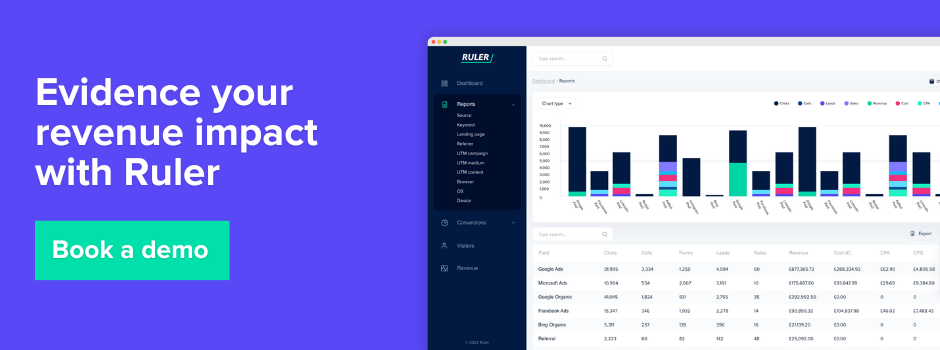
If fragmented reporting and guesswork around budget allocation sound familiar, book a demo with Ruler Analytics and we can show you how our platform connects marketing activity to leads, sales and revenue across every channel you run.
Marketing intelligence software reviewed for 2027
We have reviewed ten of the marketing intelligence tools we see mentioned by the marketing leaders, data leaders and demand generation managers and compared them against reviews online. None of these tools does everything, and the right choice depends heavily on your channel mix, your sales cycle and how much of your revenue happens offline.
1. Ruler Analytics
Ruler Analytics is a marketing intelligence and measurement platform built to help teams move away from fragmented, channel by channel reporting and towards a more complete view of marketing performance and revenue.
Rather than treating each conversion type separately, Ruler tracks and connects journeys across calls, form submissions, live chat and other conversion points using first-party tracking, then connects enquiries and customer outcomes back to the data teams already use to understand their business. This means teams can report on marketing performance against the outcomes that matter to them, such as revenue, rather than relying on lead or conversion volume as a proxy for success.
What we’ve designed it to solve
We built Ruler because too many marketing teams were reporting on leads and conversions without knowing which ones actually turned into revenue. Ruler connects the dots between a marketing touchpoint and a closed sale, using multi-touch attribution to compare how different models credit each stage of the journey. It also deduplicates conversions across channels, so teams are not left trying to reconcile different numbers from Google, Meta and their CRM separately. Unified reporting means everyone works from the same version of the truth, rather than debating whose dashboard is right.
Ruler can also send offline conversion and revenue signals back to advertising platforms through first-party tracking, which helps improve bidding and audience optimisation on the channels that are actually driving revenue, not just clicks. For the upper funnel activity that rarely produces a click, such as CTV, display, video and other offline marketing, Ruler applies statistical modelling to help measure influence that click based attribution alone would miss. This is where marketing mix modelling becomes an important part of the picture, giving a channel level view of impact that sits alongside touchpoint level attribution.
Where we see it work best
Ruler works across all industries and business models, helping teams understand marketing performance across the channels, conversion points and business outcomes that matter to them. It’s particularly valuable for teams running a multi-channel marketing mix who are tired of reconciling data from Google, Meta, LinkedIn, offline activity and other sources by hand. By connecting marketing activity with enquiries, conversions and downstream business outcomes, Ruler helps teams understand which channels and campaigns are contributing to performance, rather than relying on lead or conversion volume alone. For teams making decisions about where to invest their budget, the Budget Scenario Planner can also be used to model different investment scenarios and understand the potential impact before committing spend.
Consider Ruler if
You want to connect marketing touchpoints to CRM revenue rather than lead volume. You need first-party tracking across calls, forms and chat, not just website analytics. You are running a mix of digital and offline channels and want a budget allocation approach that accounts for both. You would rather bring marketing data into your existing BI environment than replace your reporting stack entirely.
Pricing
Ruler Analytics pricing is tiered primarily by monthly website traffic, with plans starting from around £199 per month for smaller businesses and scaling up to custom pricing for larger volumes and more advanced attribution needs. White glove onboarding is generally included, and agency rates are available.
2. 6sense
Where the tool shines
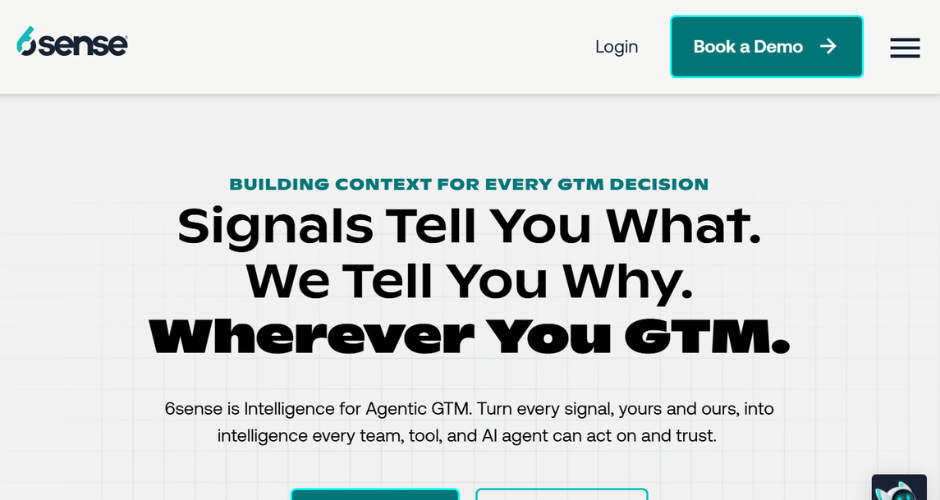
6sense is best known for account based marketing and predictive intent data. It analyses buying signals across the web to identify accounts that are actively in market, then scores and prioritises them for sales and marketing teams. For B2B organisations running structured ABM programmes, the depth of intent data and AI driven account scoring is genuinely strong, and it can meaningfully improve how sales and marketing prioritise their time.
Where it falls short
6sense is built around account and intent data rather than closed loop revenue attribution across every channel a business runs, so it tends to work best alongside other measurement tools rather than as a replacement for them. Implementation and ongoing management require a fair amount of operational investment, and several reviewers note a steep learning curve. It is also not designed with smaller marketing teams in mind.
Pricing
6sense does not publish pricing publicly. Based on third-party benchmarking data, most mid-market deployments fall somewhere between £45,000 and £80,000 per year, with enterprise contracts running considerably higher depending on the number of modules and the size of the target account list.
3. Adobe Analytics
Where the tool shines
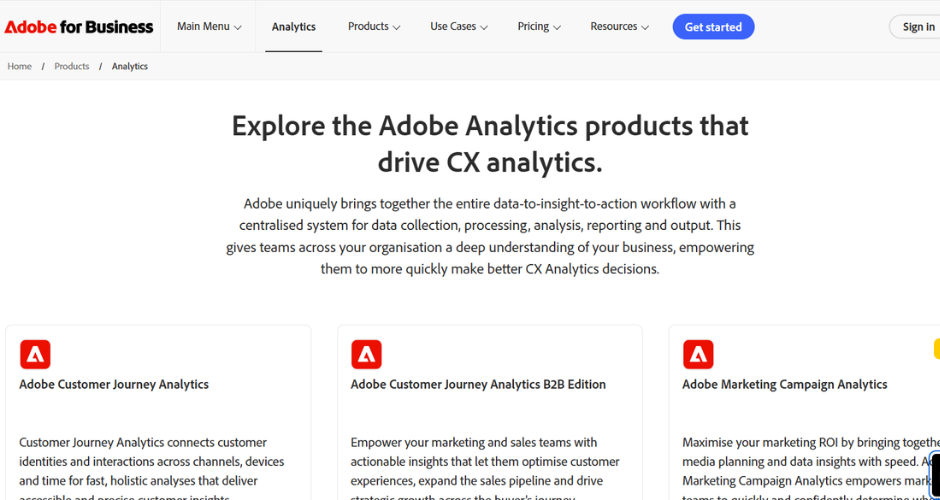
Adobe Analytics is a long established enterprise analytics platform, well suited to organisations with complex digital estates and large volumes of behavioural data. It offers strong segmentation, real time reporting and deep customisation, particularly for teams that also use other tools in the Adobe Experience Cloud. Customer Journey Analytics extends this further by combining data from multiple sources into a single, more flexible view of the customer journey.
Where it falls short
The depth that makes Adobe Analytics powerful also makes it complex. Several reviewers describe a steep learning curve and note that implementation can be costly and time consuming, particularly for teams without dedicated analytics resource. Pricing is also frequently cited as high relative to alternatives, which puts it out of reach for smaller businesses.
Pricing
Adobe does not publish list prices. Adobe Analytics is quote based, with cost driven by data volume, the number of digital properties, required features such as Customer Journey Analytics, and contract length. Budgets for a meaningful deployment typically start in the tens of thousands of pounds annually.
4. Brandwatch
Where the tool shines
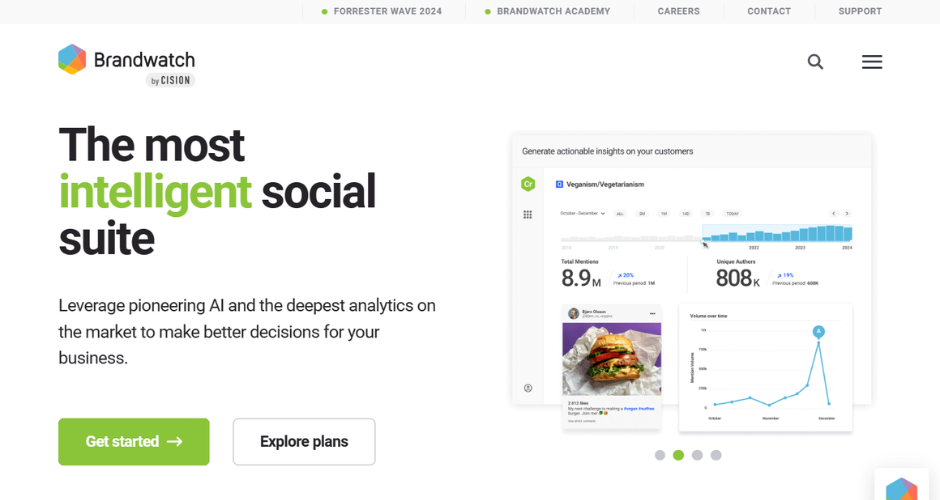
Brandwatch is a well regarded social listening and consumer intelligence platform, tracking conversations across social media, news and forums to surface brand mentions, sentiment and competitive insight. It is particularly strong for global brands and research teams that need to understand shifts in public conversation at scale, and its AI powered analytics help surface trends that would be difficult to spot manually.
Where it falls short
Brandwatch is priced and built for mid-market and enterprise research or PR teams, and smaller marketing teams are likely to find it more than they need, both in terms of cost and complexity. It is also worth noting that Brandwatch measures conversation and sentiment rather than revenue, so it tends to sit alongside a marketing measurement platform rather than replace one.
Pricing
Brandwatch does not publish pricing. Quotes are custom and depend on the modules selected, such as Consumer Intelligence, Social Media Management and Influencer Marketing. Based on third-party benchmarking, mid-market deployments typically range from around £15,000 to £45,000 per year, with enterprise contracts often exceeding £60,000.
5. HubSpot Marketing Hub
Where the tool shines
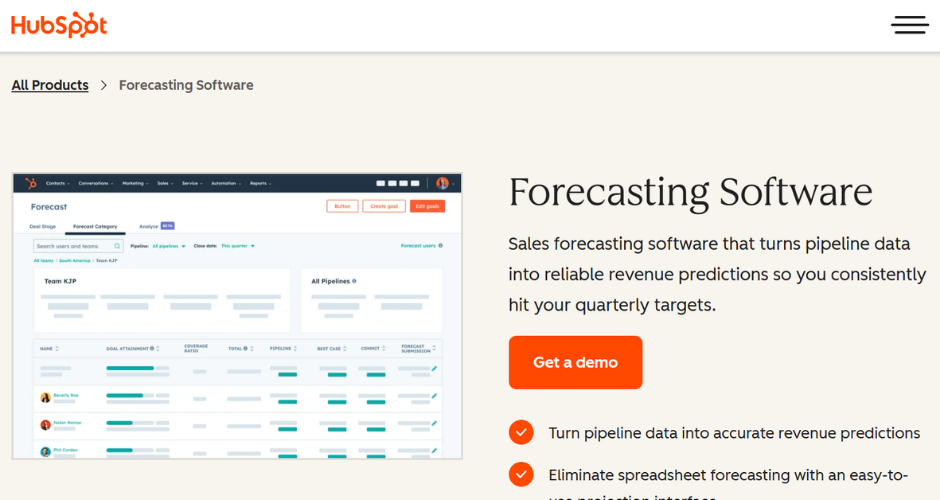
HubSpot Marketing Hub combines marketing automation, email, landing pages and reporting with HubSpot’s CRM, which makes it a genuinely useful starting point for teams that want marketing and sales data living in one place. Reporting improves noticeably at Professional and Enterprise level, adding custom attribution reporting and, at Enterprise, more advanced customer journey analytics. The free CRM tools also make it an accessible entry point for smaller teams.
Where it falls short
There is a significant jump in both price and capability between the Starter and Professional tiers, and the attribution and journey analytics features that marketing intelligence buyers usually want most only appear at the higher tiers. HubSpot’s attribution reporting also works best when most of a customer’s journey happens within the HubSpot ecosystem, so businesses with a lot of offline conversions or a complex multi-platform tech stack may find it doesn’t tell the full story on its own.
Pricing
Marketing Hub has a free tier, then Starter from around £15 per seat per month, Professional from around £700 per month including three seats, and Enterprise from around £2,900 per month including five seats, all billed annually. Professional and Enterprise tiers typically carry a mandatory onboarding fee.
6. Kantar Marketplace
Where the tool shines
Kantar Marketplace brings decades of market research expertise into a more self-serve, digital platform. It is particularly strong for brand tracking, campaign testing and concept or packaging research, drawing on Kantar’s extensive brand equity database. BrandDynamics, its brand tracking solution, gives teams a daily read on brand performance against competitors, which is genuinely useful for validating whether marketing activity is shifting perception, not just clicks or leads.
Where it falls short
Kantar Marketplace is a research and brand insight platform first, rather than a channel level attribution or revenue measurement tool, so it answers a different set of questions to most of the other platforms on this list. Teams looking specifically for click level attribution or CRM revenue matching will need to pair it with a dedicated measurement platform.
Pricing
Kantar Marketplace pricing is available on request, with self-serve, guided self-serve and expert service options depending on the level of support required. Individual studies and subscriptions are quoted based on scope, audience and market coverage.
7. Meltwater
Where the tool shines
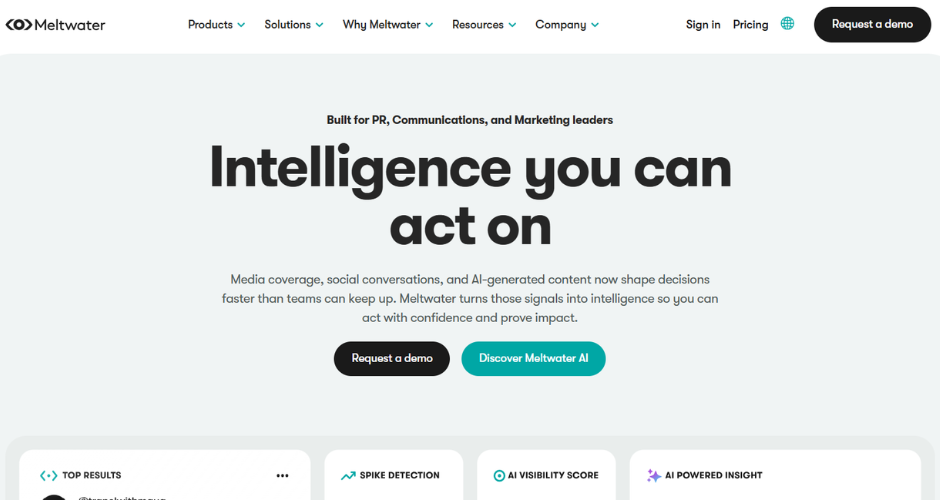
Meltwater is a well established media intelligence platform, combining media monitoring, social listening and influencer identification in one suite. Its AI assistant helps teams move from raw mentions to summarised insight more quickly, and coverage across a large number of global media sources makes it a strong choice for comms and PR teams who need to react quickly to breaking coverage or sentiment shifts.
Where it falls short
Meltwater is built around earned media and social conversation rather than paid channel performance or revenue attribution, so marketing teams typically use it to complement, rather than replace, a measurement platform. Several reviewers also note that pricing and contract terms, including a standard 12 month minimum and long notice periods for cancellation, are worth reading carefully before signing.
Pricing
Meltwater does not publish pricing. Based on third-party benchmarking data, smaller deployments start from around £6,000 to £15,000 per year, with broader enterprise packages often reaching £100,000 or more depending on the modules and geographic coverage included.
8. Nielsen Marketing Mix Modeling
Where the tool shines
Nielsen is one of the most established names in marketing measurement, and its marketing mix modelling offering draws on decades of data and sophisticated modelling to assess the impact of marketing investment across channels, including offline media such as TV and radio. For large advertisers with significant offline spend, Nielsen’s scale and heritage in this space is hard to match, and tailored simulations help support strategic planning and budget optimisation.
Where it falls short
Nielsen’s scale and heritage come with enterprise level pricing and processes, which tends to put it out of reach for smaller and mid-market teams. It is generally not designed for self-serve use, and typically involves a managed service engagement with a longer lead time than platform based attribution tools.
Pricing
Nielsen does not publish pricing for its marketing mix modelling service. Given the managed, enterprise nature of the engagement, budget expectations should be set at enterprise level, and are best confirmed directly with Nielsen based on the scope of channels and markets involved.
9. Semrush
Where the tool shines
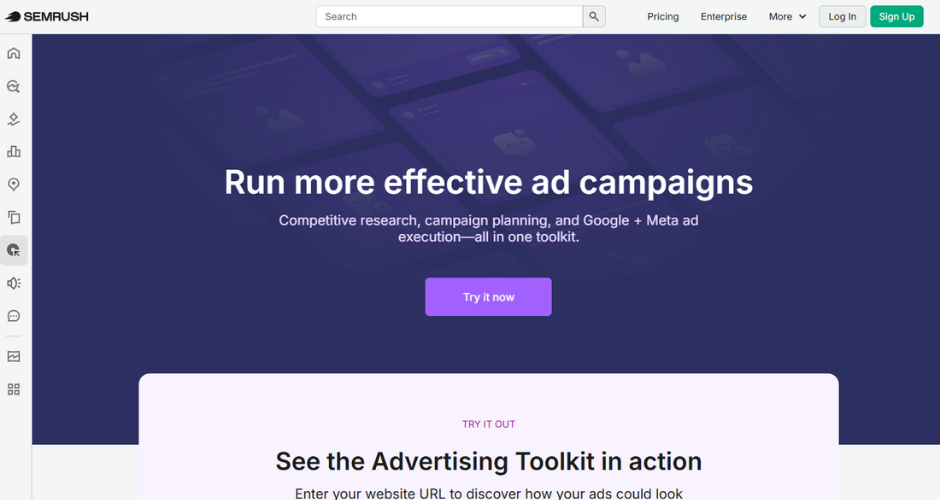
Semrush is primarily known for SEO, but its Traffic and Market Trends toolkit extends into genuinely useful competitive and market intelligence, including traffic overview data, market share estimates and competitor monitoring. For marketing teams that want search visibility, content performance and competitive benchmarking in one subscription, Semrush offers strong value, and its modular toolkits mean you can add capabilities like advertising intelligence or AI visibility tracking as needed.
Where it falls short
Semrush is built around search, content and competitive research rather than closed loop attribution or revenue reporting, so it tends to sit well alongside a measurement platform rather than instead of one. Some of the more advanced market intelligence features, such as deeper Share of Voice metrics, are only available on higher tiers or as paid add-ons, which can push the total cost up quickly for teams that want the full picture.
Pricing
Semrush pricing starts at around £110 per month for the Pro plan, rising to around £200 per month for Guru and £400 per month for Business, all billed annually. Enterprise pricing and several specialised toolkits, including Traffic and Market Trends, are quoted separately.
10. Similarweb

Where the tool shines
Similarweb provides estimated traffic, audience demographics and channel breakdowns for competitor websites and apps, which makes it a strong tool for market research, competitive benchmarking and identifying where competitors are winning traffic. Its Sales Intelligence and App Intelligence products extend this further for teams that need company level intent data or app performance benchmarking.
Where it falls short
Similarweb’s traffic estimates are modelled rather than measured directly, so figures should be treated as directional rather than exact, something several reviewers note explicitly. Like Semrush, it is a competitive and market intelligence tool rather than a revenue attribution platform, so it answers a different question to tools like Ruler Analytics or Adobe Analytics.
Pricing
Similarweb’s self-serve Web Intelligence plans start from around £100 per month, rising to roughly £270 and £440 per month for tiers that add SEO and advertising intelligence. Business and Enterprise packages, along with Sales Intelligence and App Intelligence products, are custom quoted.
Bringing it all together
None of the tools above will single-handedly solve the fragmented data problem we described earlier. Brand tracking tools like Kantar answer a different question to attribution platforms like Ruler, and competitive intelligence tools like Semrush and Similarweb answer a different question again. The businesses we see getting the most value tend to combine two or three of these approaches rather than expecting one platform to do everything.
What matters most is being honest about which part of the funnel is causing the most pain right now. If it is proving which channels drive revenue, not just leads, that points towards an attribution and measurement platform. If it is understanding brand perception or competitor positioning, that points towards research and market intelligence tools instead.
If fragmented data, unclear attribution, or difficulty measuring upper funnel and offline activity sound like familiar problems, this is exactly what we built Ruler Analytics to solve.
Rather than asking you to interpret ten different platforms separately, Ruler connects your marketing touchpoints, your CRM and your revenue data into one consistent view, and helps you understand which channels and campaigns are genuinely worth further investment.
Book a demo with Ruler Analytics and we will show you how it could work for your data and your channel mix.